
What Probate Covers in Okmulgee County
Probate is the court process for settling what someone owns after death. It also covers the care of people who cannot manage their own affairs. In Okmulgee County the work includes wills, estates, guardianships, conservatorships, and trusts. The court oversees how property passes and how debts get paid. It protects heirs, creditors, and dependents along the way.
There is no separate probate court in the county. Probate is a case type inside the Okmulgee County District Court. The Court Clerk keeps the files. Oklahoma Title 58 governs the process, and it places probate jurisdiction and venue in district court. The statewide search tools sort these matters into clear case types:
- Probate Proceedings
- Probate Miscellaneous Proceedings
- Guardianships
- Conservatorship
- Trust Proceedings
- Filing of Wills
Probate files are public for a reason. Creditors, heirs, and buyers all need to know who controls an estate. A clear public file lets them check. Most filings in an Okmulgee County estate stay open to view, even when the dollar figures are large. The limits fall on minors, sealed exhibits, and protected health details, not the estate itself.
Probate Terms Defined
Probate filings use words that rarely come up elsewhere. A short guide helps when reading a docket or a file.
- Testator
- A person who makes a will.
- Executor
- The person named in a will to carry out its terms.
- Administrator
- The person the court appoints to settle an estate when there is no will or no named executor.
- Intestate
- Dying without a valid will, so state law decides who inherits.
- Guardianship
- Court authority over the care of a minor or an adult who cannot manage personal needs.
- Conservatorship
- Court authority over the property and finances of a protected person.
How to Search Okmulgee County Probate Records
Most Okmulgee County probate records start online. On Demand Court Records and the Oklahoma State Courts Network both carry District Court dockets. The free search shows the docket, the parties, and the filing history. Scanned images and older files may sit at the courthouse only.
- Open On Demand Court Records and choose Oklahoma District Courts, then Okmulgee as the court.
- Set the case type to Probate Proceedings or Guardianships, and enter the decedent or party name as Last, First.
- Use a filed-date range for older estates, then open a case to read the docket or contact the Court Clerk for images.
Case numbers follow an Oklahoma pattern. A probate file carries the PB code, a year, and a sequence. When a docket lists that number, it speeds the next search. The two statewide systems do not always hold the same files, so checking both is wise. When neither shows an image, the Court Clerk holds the certified original.
Where Probate Is Heard in Okmulgee County
Probate is heard at the Okmulgee County Courthouse downtown. The Court Clerk runs the case files from Suite 305 at 314 W. 7th Street. The phone line is 918-756-3042, and the counter is open from 8:00 a.m. to 4:30 p.m. The court, clerk, jail, and sheriff sit close together in the same few blocks.
Okmulgee County holds its justice offices to published standards. The county's criminal justice authority documents its accreditation and detention standards online.
Those standards cover the jail side of the county system, not the courthouse. Probate files stay with the Court Clerk, who can also pull marriage and divorce records from the same office.
Okmulgee County Court Clerk
Probate Division of the District Court
314 W. 7th St., Suite 305
Okmulgee, OK 74447
918-756-3042
Hours: 8:00 a.m. to 4:30 p.m.
Okmulgee County Probate Filing Fees
Oklahoma does not publish a single Okmulgee County probate fee chart online. Filing and copy charges are best confirmed by phone with the Court Clerk. The online search side, by contrast, has clear public pricing. Free docket viewing is the starting point for most searches.
| Item | Amount |
|---|---|
| ODCR docket search | Free |
| ODCR District Court image access | $55 per month |
| Single court image access | $25 per month |
| Probate filing fee | Call Court Clerk |
| Certified copy | Call Court Clerk |
Note: A free ODCR docket search confirms a probate case exists, but scanned wills and orders need paid image access or a copy request to the Court Clerk.
What Okmulgee County Probate Records Show
A probate file tracks an estate from opening to close. Early documents prove the will or open an intestate estate. The court then appoints someone to act. Middle documents handle property and creditors. Final documents close the estate and pass the assets. A typical Okmulgee County file can include:
- Will filings and petitions to admit a will
- Intestate estate petitions
- Letters testamentary or letters of administration
- Notices to creditors and proof of publication
- Inventories and appraisals
- Claims, objections, hearings, and orders
- Final accountings and decrees of distribution
Guardianship and conservatorship files run a parallel path. They add petitions, status reports, and orders that protect the ward.
The order of filings tells a story. A notice to creditors opens a window for claims. An inventory lists what the estate holds. The final accounting shows every dollar in and out. A decree of distribution then closes the case and names who receives what. Reading the file in that order makes a complex estate far easier to follow.
Wills and Guardianships in Okmulgee County
A will can reach the court in two ways. Someone may file it for safekeeping, or someone may petition to admit it to probate. Once admitted, the court issues letters that let the executor act. If there is no will, the estate is intestate, and the court names an administrator instead. Either way, the file shows who is in charge and what they may do.
Guardianship and conservatorship cases protect people, not just property. A guardian looks after a minor or an adult who cannot care for themselves. A conservator manages money and assets for that person. These cases bring regular reports to the court. Records that name minors or expose private finances are often limited.
Wills can be challenged. An interested party may file an objection and ask the court to deny the will. Grounds can include a later will, undue influence, or a question of capacity. A contest adds hearings and orders to the file. The docket then shows how the dispute was resolved.
The Oklahoma Small-Estate Affidavit
Not every estate needs a full probate case. Oklahoma Title 58 includes a small-estate affidavit path for certain modest estates. Some personal property can transfer by affidavit after at least ten days, when the estate value falls under a statutory limit. That route can mean fewer court filings, so fewer public records exist for it. Anyone weighing it should check the current statute or talk with a lawyer first. Treat this only as background on why some estates leave a thin paper trail.
The threshold and the exact steps change over time. Oklahoma updates its statutory dollar limits, so an old figure may be wrong today. A bank or transfer agent may also ask for its own paperwork. None of that shows up in a court docket. That gap is one reason a small estate can be hard to trace through the usual search.
Restricted Okmulgee County Probate Records
Most probate dockets are open to the public. Some parts are not. A judge can seal a file or specific exhibits. Guardianship records that name minors are commonly limited. Mental-health and competency details carry extra protection under Oklahoma law. Filers must also strip personal identifiers, such as full account numbers, from public documents.
When a record is restricted, an online search may show little or nothing. The next step is the Court Clerk. Staff can explain what is public, what is sealed, and what a copy request needs. For the full range of court filing services, the Okmulgee County Court Clerk office is the right contact. A judge's order may still be required to view a sealed file.
Older Okmulgee County Estate Files
The county's records reach back more than a century. Okmulgee County was organized at statehood in 1907, and its courts have settled estates ever since. The Oklahoma Historical Society traces that long story in its entry on Okmulgee County.
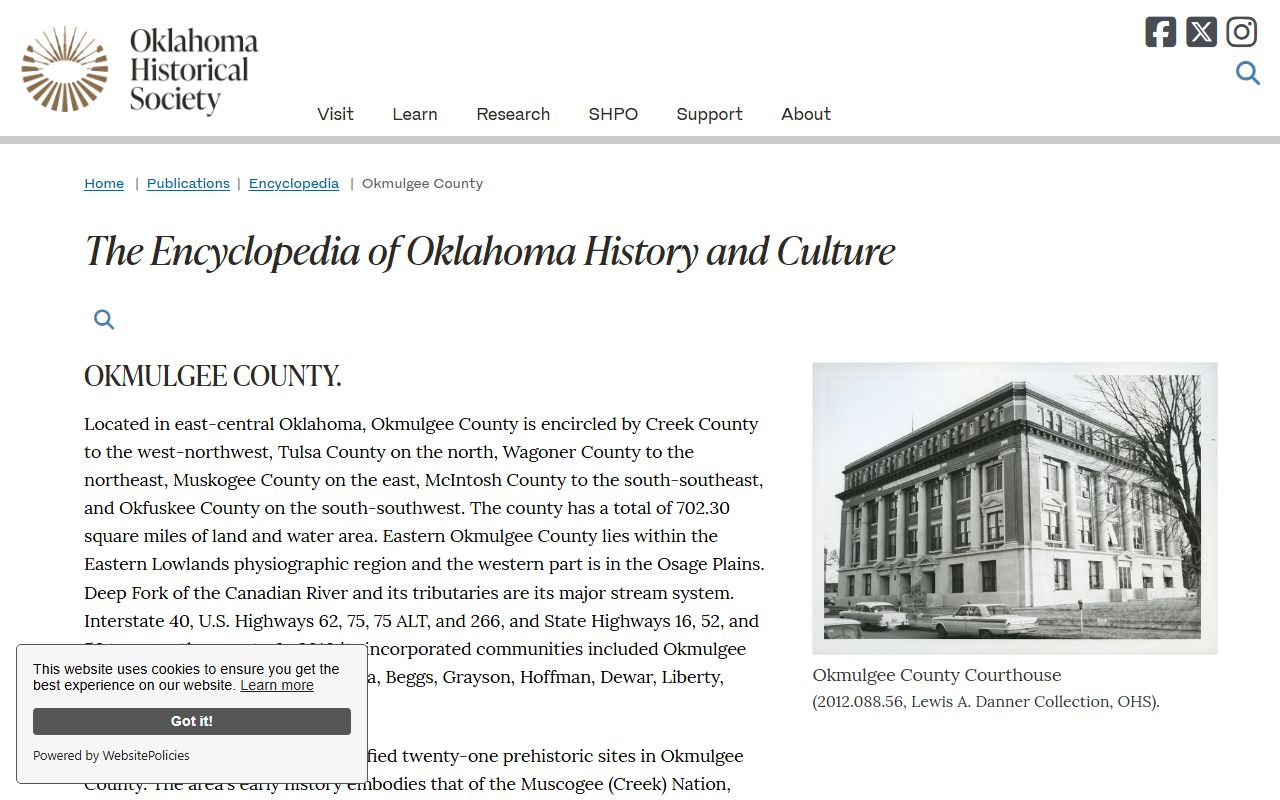
Decades of estate files have passed through the courthouse since then. Older probate cases may predate the online systems. Those files often sit in storage in paper or microfilm form. To reach one, give the Court Clerk the decedent's name and an approximate year. Staff can confirm what survives and how to get a certified copy.