
About the Okmulgee County Court Clerk
The Court Clerk is an elected county officer. Charly Frazier-Criner serves as the Okmulgee County Court Clerk. The office sits inside the historic county courthouse in downtown Okmulgee. It is the front door for nearly every District Court case file in the county.
Day to day, the clerk's staff take in new filings, stamp them, and build the official record for each case. They issue marriage licenses. They make plain and certified copies. They collect court costs, fines, and case fees. When a paper file is not online, this is the office that pulls it from storage. All courthouse visitors enter through the north door at the security desk and sign in.
Okmulgee County Court Clerk
Court Clerk: Charly Frazier-Criner
314 W. 7th St., Suite 305
Okmulgee, OK 74447
918-756-3042
Fax: 918-758-1237
Hours: 8:00 a.m. to 4:30 p.m.
What the Okmulgee County Court Clerk Handles
The Court Clerk handles records tied to court cases, not land. Every District Court matter filed in the county leaves a trail in this office. That trail covers civil suits, felony and misdemeanor criminal files, family cases, and more. The clerk also takes payments and issues licenses. Here are the core record types the office holds.
- Civil case files, judgments, garnishments, and liens filed in court
- Criminal felony (CF) and misdemeanor (CM) case records
- Family and domestic (FD) files, including divorce and custody
- Probate (PB), guardianship, and small claims (SC) cases
- Protective orders (PO) and traffic (TR) case records
- Marriage licenses and certified court copies
- Court payments, fines, and citation balances where eligible
Case numbers in Oklahoma follow a short code. A felony reads as CF, a misdemeanor as CM, a civil case as CV, and a family case as FD. That prefix tells you which division the file lives in. The clerk can confirm a number when you call.
The office also collects money tied to cases. That includes fines, court costs, and citation balances that route through the state payment systems. Some traffic tickets can be paid online, while others need a counter visit or a call first. The clerk can tell you whether a balance is eligible for online payment or whether a court date controls the next step.
How to Request a Certified Copy
A certified copy carries the clerk's seal and signature. Courts, banks, and state agencies accept it as proof. A plain printout from an online docket does not carry that weight. Most legal uses need the certified version. The steps below walk through a request.
- Find the case number first. Search the online docket or call the clerk to confirm the year, code, and sequence, such as CF-2014-1.
- Tell the office which document you need. A decree, a judgment, or a full file each carry a different copy count.
- Complete the request with party names, the document type, and the number of copies you want certified.
- Pay the copy and certification fee. Call 918-756-3042 first to confirm the current amount and accepted payment method.
- Pick up the copy at the counter or ask the clerk to mail it. Older files may take longer if staff must pull paper from storage.
Note: Certified copies are required for most legal filings, while uncertified online printouts are convenience copies that courts and agencies may reject.
Records Request Form Fields
A written request keeps your order clear and easy to fill. County open-records forms in Okmulgee follow a common pattern, much like the jail authority's open-records form. The table lists the fields a court-record request usually asks for. Bring this information when you call or visit.
| Field | Required | Notes |
|---|---|---|
| Requester full name | Yes | The person asking for the record. |
| Mailing address | Optional | Needed if you want copies mailed. |
| Email and phone | Email yes | Used to confirm fees and availability. |
| Case number | Helpful | Speeds the search; staff can look it up by name. |
| Party names | Yes | Enter as Last, First for each party. |
| Document type | Yes | Decree, judgment, full file, or single filing. |
| Number of copies | Yes | Note how many should be certified. |
Okmulgee County Court Clerk Fees
Court fees split into two buckets. Some are set by the clerk for copies and licenses. Others come from the statewide online systems that host the dockets. The table blends the figures confirmed for Okmulgee with the statewide portal tiers. Local copy and certification amounts are not posted online, so call the clerk before you pay.
| Item | Amount |
|---|---|
| Marriage license, standard | $50 |
| Marriage license with premarital counseling certificate | $5 |
| ODCR public docket search | Free |
| ODCR advanced search tools | $5 per month |
| ODCR Oklahoma District Court images | $55 per month |
| ODCR single court image access | $25 per month |
| Certified and plain court copies | Call 918-756-3042 |
The marriage figures follow the Title 43 framework Oklahoma counties use. A couple who finishes qualifying premarital counseling can drop the license fee sharply. Confirm the payment method with the clerk before arrival, since the local copy-fee table is not published.
The online tiers are a separate cost from the clerk's counter fees. ODCR lets anyone view dockets for free. The paid tiers add advanced search tools and access to scanned document images. A casual searcher rarely needs them. A title researcher or a lawyer pulling many images may find the monthly access worth the price.
Searching Okmulgee County Court Records Online
Most case dockets reach the public through two state systems. The Oklahoma State Courts Network carries dockets for many counties. On Demand Court Records covers participating courts, and Okmulgee is among them. Both let you search free by name or case number before you ever contact the clerk.
Use the OSCN docket search first when you have a case number. Pick Okmulgee County District Court from the county dropdown. If the case is not on OSCN, switch to ODCR and set the court group to Oklahoma District Courts, then choose Okmulgee. Party names go in as Last, First. The ODCR pricing page shows that docket viewing is free while scanned images sit behind a paid tier. When the image you need is gated, the clerk can make a certified copy of the paper file instead.
Online dockets are convenience copies. The clerk's official file controls if the website and the paper record ever disagree.
Court Clerk vs County Clerk in Okmulgee County
Okmulgee County runs two clerk offices with different jobs. The split confuses many searchers. The Court Clerk keeps court case files. The County Clerk keeps land and county-board records. Sending a deed request to the Court Clerk, or a divorce request to the County Clerk, only slows things down.
The Court Clerk holds the records described across this page: civil, criminal, family, probate, traffic, protective orders, marriage licenses, and certified court copies. Deeds, mortgages, liens, plats, and Board of Commissioners records belong to the register of deeds. Those land records live with the Okmulgee County Clerk, who runs a separate search portal. Each office covers only its own records, so match the request to the right counter.
Records the Court Clerk Does Not Hold
Some cases never reach the county courthouse at all. Federal matters move through a separate system with its own clerks and its own search tool. The Court Clerk in Okmulgee County cannot pull a federal file. If your case is federal, you need PACER and the U.S. District Courts, not the county counter.
Federal records open through the national PACER portal, shown below at pacer.uscourts.gov.
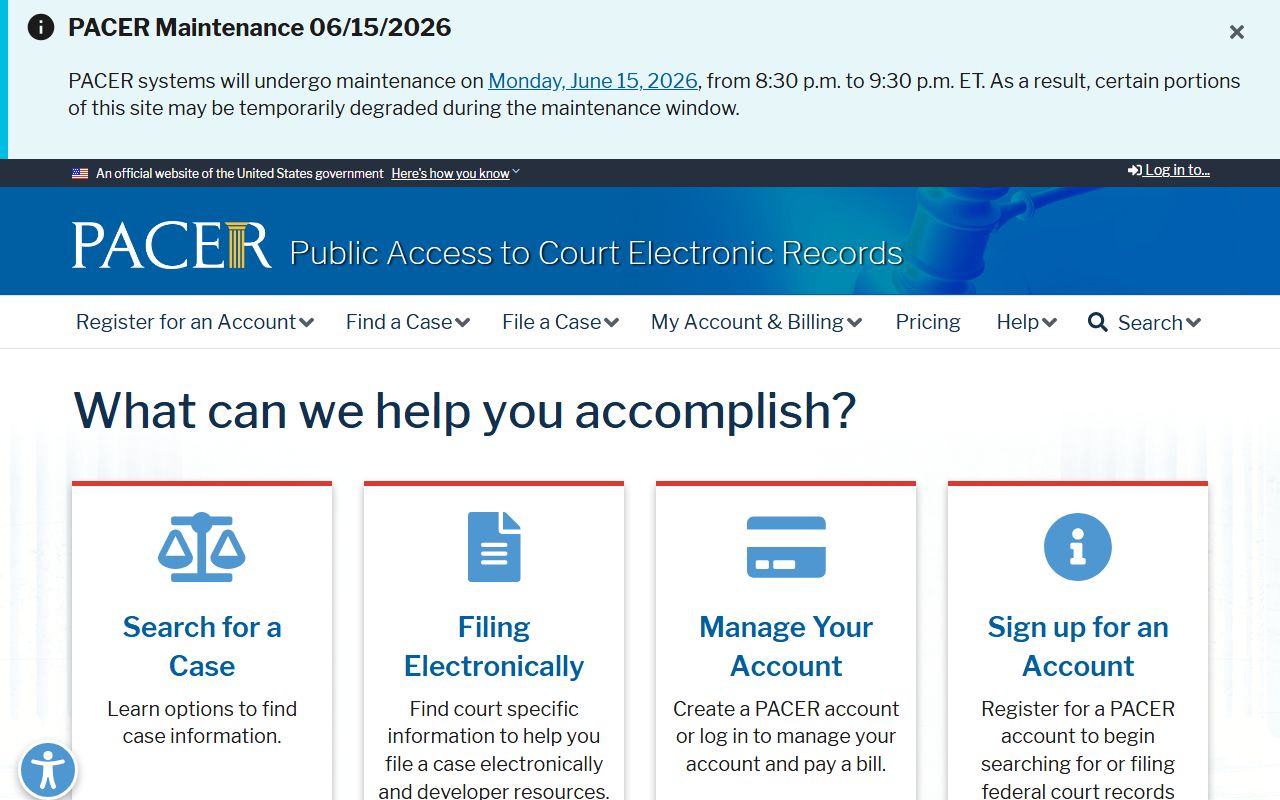
PACER is not the same as OSCN or ODCR. Use it for federal criminal cases, federal civil suits, and bankruptcy files. Each federal district also runs its own court site. The Tulsa-based court covers part of the region through the U.S. District Court for the Northern District of Oklahoma.
The image below is captured from that Northern District court page.
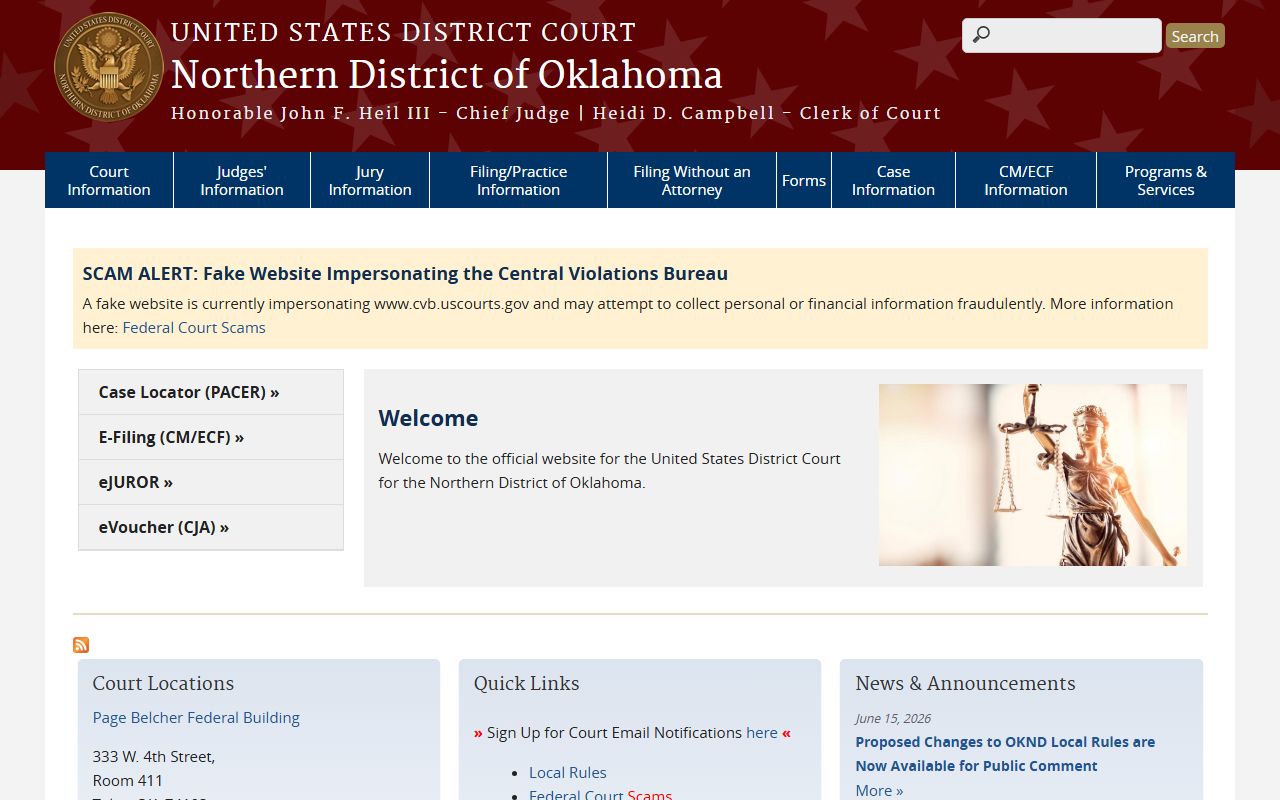
Okmulgee County sits closer to the Eastern District in many filings. That court runs out of Muskogee and posts its own contacts. You can reach it through the U.S. District Court for the Eastern District of Oklahoma.
The screenshot here comes from that Eastern District court site.
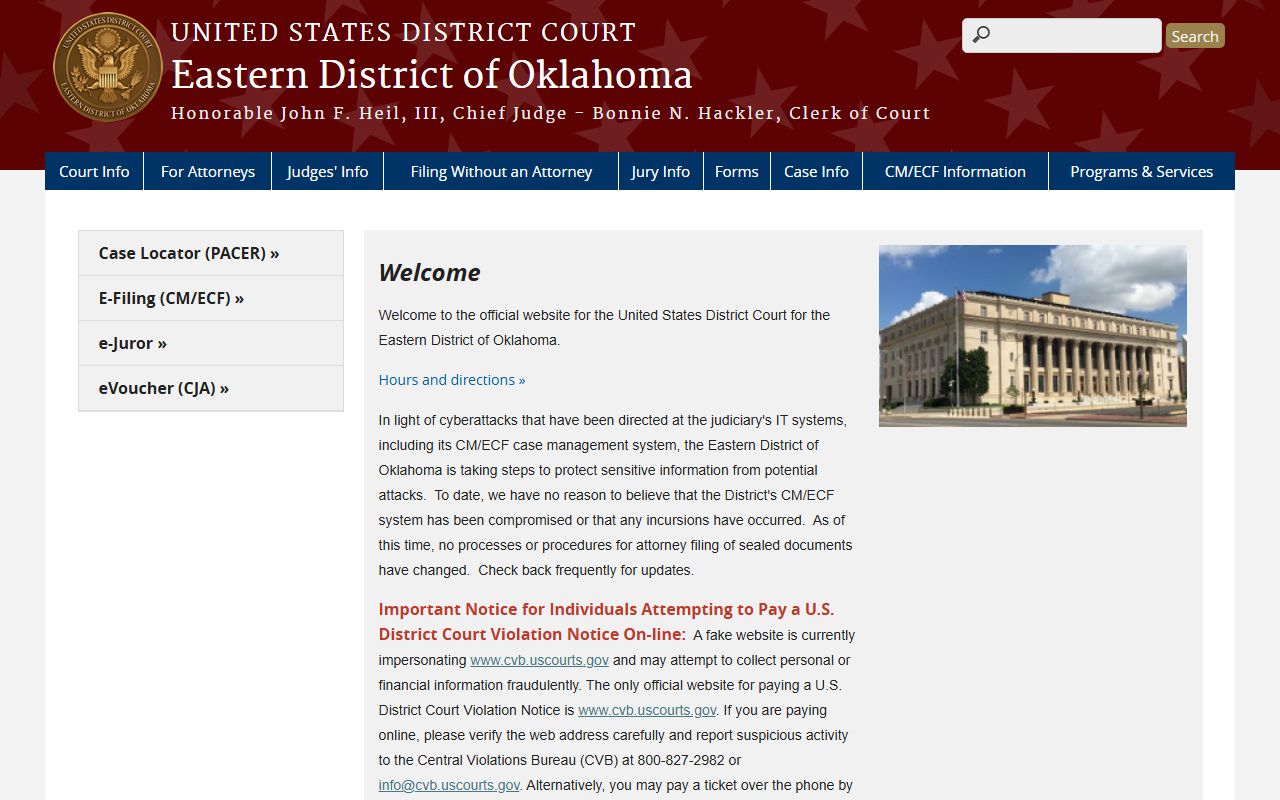
Tribal matters add a third lane. The Muscogee (Creek) Nation District Court handles many cases within the Nation's boundaries. A searcher who cannot find a file in the county system should check the federal portal and the tribal court before assuming the record is missing.
Public Access Limits at the Court Clerk
Oklahoma law leans open. The Open Records Act treats most government records as public during business hours. Court files follow that rule too, with set exceptions. Anyone may ask for a public case file, and no reason is required.
Some records stay closed. Juvenile cases are confidential by statute and rarely show up in a public search. Sealed and expunged records should not appear in normal results. Adoption and mental-health files are also restricted. Personal identifiers like Social Security numbers and account numbers must be left off public filings under the state's redaction rules. For a sealed or expunged file, the clerk cannot simply hand it over; the law controls what may be released. When a record is restricted, the office can tell you the proper channel rather than turn you away empty-handed.
Note: The Court Clerk cannot release juvenile, sealed, or expunged case files to the public, so direct those questions to the court or to counsel.